On May 18, 1980, Mt. St. Helens erupted. Because of that eruption, a young scientist living in New Zealand moved back to the United States, landing in Vancouver, Washington. There he spent his career studying, among other things, the lahars (volcanic mudflows) of Mt. St. Helens. Because he moved back, he eventually met me, we fell in love and married. Because of that eruption, we are a family.
However.
“You’ll be lucky if she is ready to have a relationship with you by the time she is 40.” Those were the words of our therapist, referring to my geologist’s relationship to my youngest daughter. She was a teenager at the time, and the two of them couldn’t stand each other. Really. At all. To have two of the humans I loved the most deeply dislike each other was heart-wrenching. To think they might never come to understand, much less love each other, was a bitter, bitter, bitter pill to swallow.
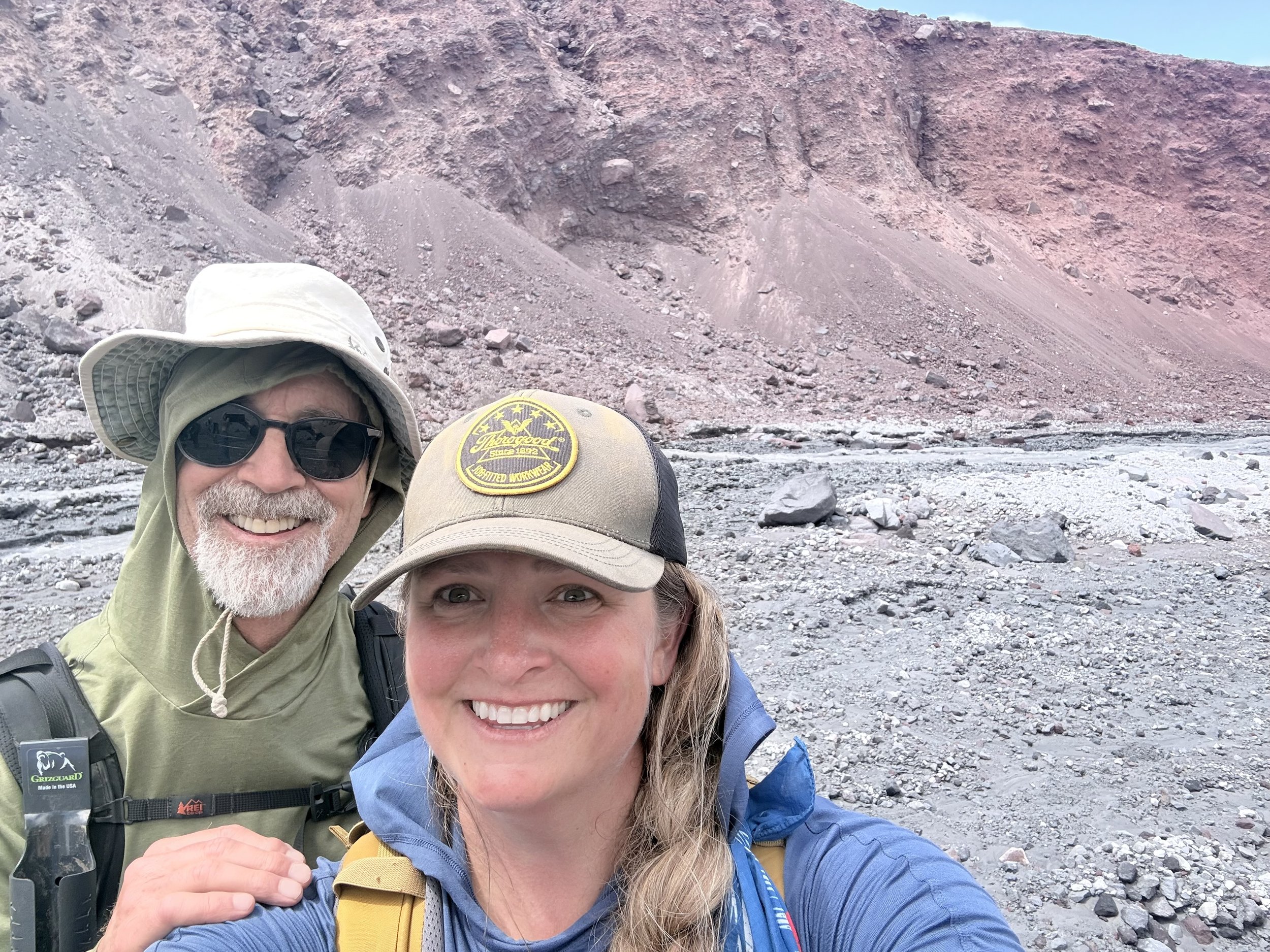
Today, that scientist is 78 years old, that daughter is 40, and they are headed to Mt. St. Helens to hike into the crater of the mountain that made us a family. The hike, a bucket-list trip offered by the Mt. St. Helens Institute, attracts people from all over the country on an adventure into territory where few people get to go. He is there to talk about the history and geologic processes of the place. His fellow hikers will learn about the eruption, the resulting devastation, and the ongoing renewal and restoration of life on and around the mountain. And she will be there too, proudly standing next to the guy she’s loved and known as her dad for many years now.
Mountains aren’t the only things that suffer catastrophic eruptions. Eruptions that can lead to both devastation and the potential for renewal and restoration. Hearts and relationships can, too. Talk about a picture of redemption and hope. Two people who couldn’t stand each other, standing together in the crater that resulted from the eruption that continues to make us a family.